
The Lunch Lady
Breakfast pizza
Homemade sheet-pan dough made with Sunrise Flour Mill Heritage Pizza Flour, topped with sausage gravy, maple-sage sausage, bacon and mozzarella. A thick, soft crust with a golden bottom.
Published · Updated
- Servings
- 6–8; one 18×13-inch pan
- Total time
- About 2 hours, including the rise
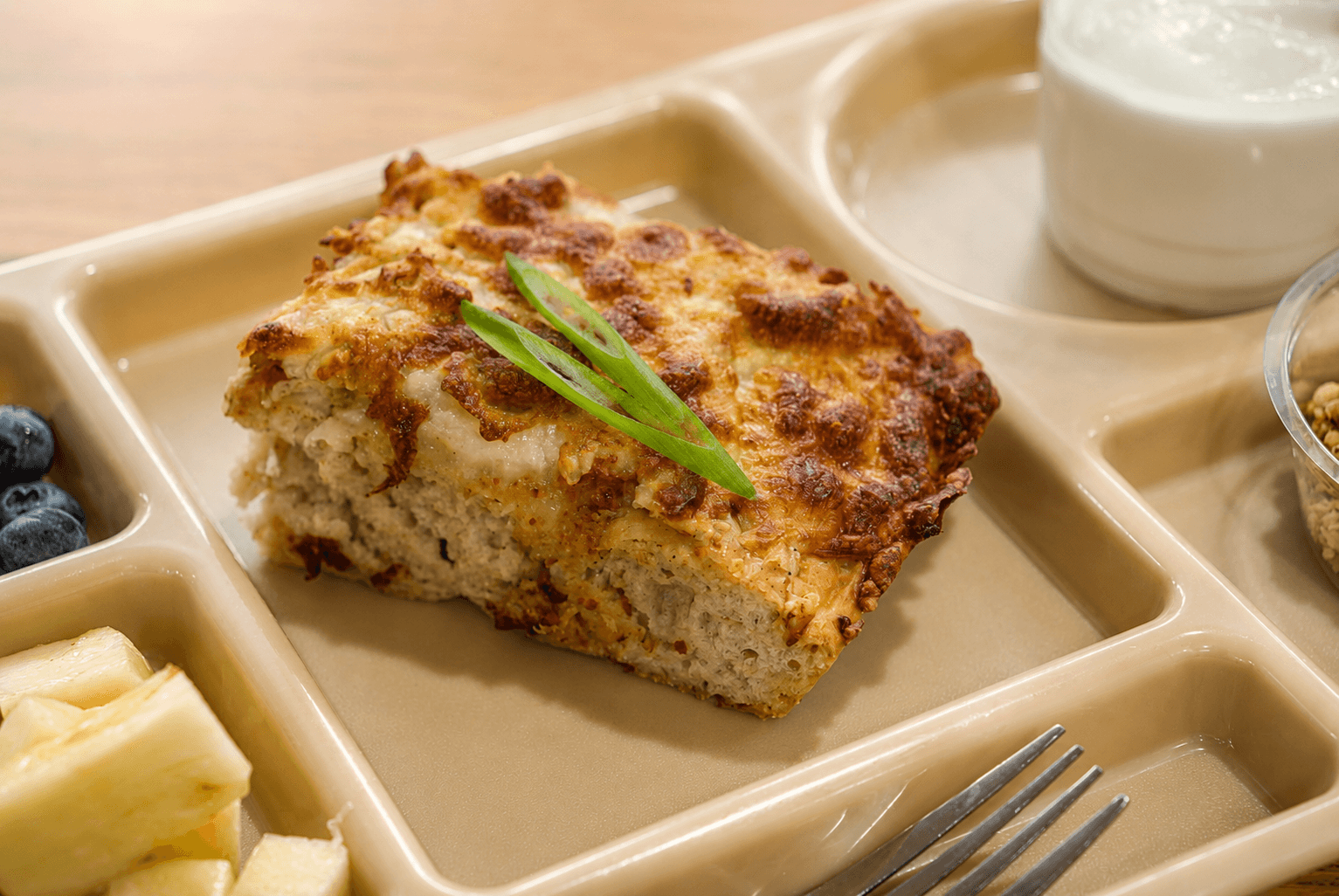
The pan and the olive oil
Sunrise Flour Mill Heritage Pizza Flour makes the dough, but the pan matters too. I use LloydPans Grandma pans. They're great for getting that golden bottom with a soft middle. And don't forget the olive oil in the pan. You want the bottom of that dough baking in the oil.
There's more yeast in this dough to help it rise quickly, with about an hour to get it ready for its first bake. Give it a warm spot and watch for it to get puffy. Give the crust that first bake before the gravy goes on so the middle has a head start.
Keep the whisk moving
This was the first time I made pork sausage, and it was easier than I could have imagined. I mixed it the day before, left it in the cooler and cooked it the next day. Then I used that fat for the gravy.
The gravy is simple. Keep the whisk moving and adjust the heat so the flour doesn't scorch on the bottom. Grind the pepper fresh. You're putting the work in, so give the food something good to work with. The old pre-ground stuff doesn't compare.
Have some tasting spoons next to you. This recipe gets you started, but you decide when the salt, pepper and milk are right. You want a gravy that spreads over the crust. And if there's extra, it is great on an omelet. A splash of water loosens it back up when you reheat it.
Watch it in the kitchen
Videos are hosted by Instagram. Privacy details
Breakfast pizza · Instagram reel
Home recipe
Breakfast pizza
The Lunch Lady · Jared Veldheer
- Servings
- 6–8; one 18×13-inch pan
- Prep time
- About 35 minutes
- Cook time
- About 45 minutes
- Total time
- About 2 hours, including the rise
Equipment: 18×13-inch rimmed metal baking sheet, preferably dark, stand mixer with dough hook, saucepan and whisk.
Ingredients
Check off ingredients as you go.
Maple-sage sausage
Cook the meat
Dough
Gravy
Top and finish
Instructions
Maple-sage sausage
This makes about 2 lb of sausage. Use half for the pizza and freeze the other half, or halve the sausage recipe.
- Combine the dry seasonings. Separately stir the maple syrup into the ice water.
- Mix both into the very cold pork for about 90 seconds to two minutes, until the meat becomes tacky and holds together.
- Cook a small test patty through to 160°F and taste it. Adjust the seasoning if needed.
- Cook the sausage the same day, or cover and refrigerate it overnight before cooking the next day.
Cook the meat
- Heat the oven to 425°F. Break the sausage into roughly ½-inch pieces on a sheet pan. Leave space between them.
- Roast about 15 to 20 minutes, turning once and beginning checks at 15. Cook the sausage to 160°F.
- Pour off and save the fat without pressing the meat dry. Mix the bacon with the cooked sausage.
Dough
- Mix flour and the first 550 g water with the dough hook on the lowest speed for two minutes. Cover and rest 15 minutes.
- Whisk honey and yeast into the remaining 100 g water. Add this, the 54 g oil and salt to the dough. Mix two minutes on low, then knead on low for about seven minutes. Stop when the dough holds together and remains tacky.
- Coat the bottom and sides of the pan with the remaining 45 g olive oil. Keep the oil in the pan; it helps brown the bottom of the crust. Press the dough out gently with oiled hands. Leave room below the rim for the rise.
- Proof in a warm place, about 100°F. After 10 minutes, gently press toward the corners. Continue until puffy, about 30 minutes total. If it is still dense, give it more time. Use a separate warm spot if the oven is preheating.
- Preheat the oven to 450°F conventional or 425°F convection, with a rack in the lower third. Dimple the dough and par-bake on the oiled pan for about 10 to 12 minutes, beginning checks at eight. The center should look set and the underside should start to turn light golden before topping.
- Leave the crust on the oiled pan for the final bake.
Gravy
- Warm the fat in a saucepan over medium-low heat. Whisk in the flour and cook for about two minutes, keeping the whisk moving along the bottom and into the corners. Lower the heat if the flour starts browning quickly.
- Gradually pour in the milk while whisking. Bring to a gentle simmer and keep stirring until smooth and thick enough to spread, about three to five minutes.
- Stir in freshly ground pepper and a little salt. Taste with a clean spoon, then adjust the salt and pepper. Whisk in a splash more milk if the gravy is too thick. It should spread easily over the crust, with the meat added as a separate layer.
Top and finish
- Spread warm gravy on the par-baked crust, distribute the cooked sausage and bacon evenly, then cover with mozzarella.
- Bake at 450°F conventional or 425°F convection for about 10 to 15 minutes, checking at eight. It is ready when the cheese is melted with browned spots, the underside is golden and the center reaches 165°F. If the cheese browns first, loosely cover with foil and keep baking until the center and crust are ready.
- Rest about five minutes before cutting into 18 squares. Transfer to a wire rack once firm enough to lift so the base stays crisp. Serve with blueberries and yogurt if desired.
Recipe notes
- The sausage recipe makes twice what you need. Halve it for one pizza, or freeze the extra for another breakfast.
- If you'd rather use prepared breakfast sausage, you'll need about one pound of raw sausage. Cook it before topping the pizza.
- Use low-moisture mozzarella. Fresh mozzarella releases more water onto the crust.
- I use LloydPans Grandma pans. This recipe is sized for an 18×13-inch pan. If using a smaller pan, reduce the dough and toppings rather than piling the full batch into it. Check the underside during baking, especially with a dark pan.
- The extra yeast helps the dough proof quickly, but look for a puffy dough instead of baking by the clock. The home total includes making the toppings, the first bake and the final bake.
- Extra gravy is great on an omelet. Reheat gently in a saucepan, whisking in a little water if it has thickened. Bring it to a simmer and taste again before serving.