
The Lunch Lady
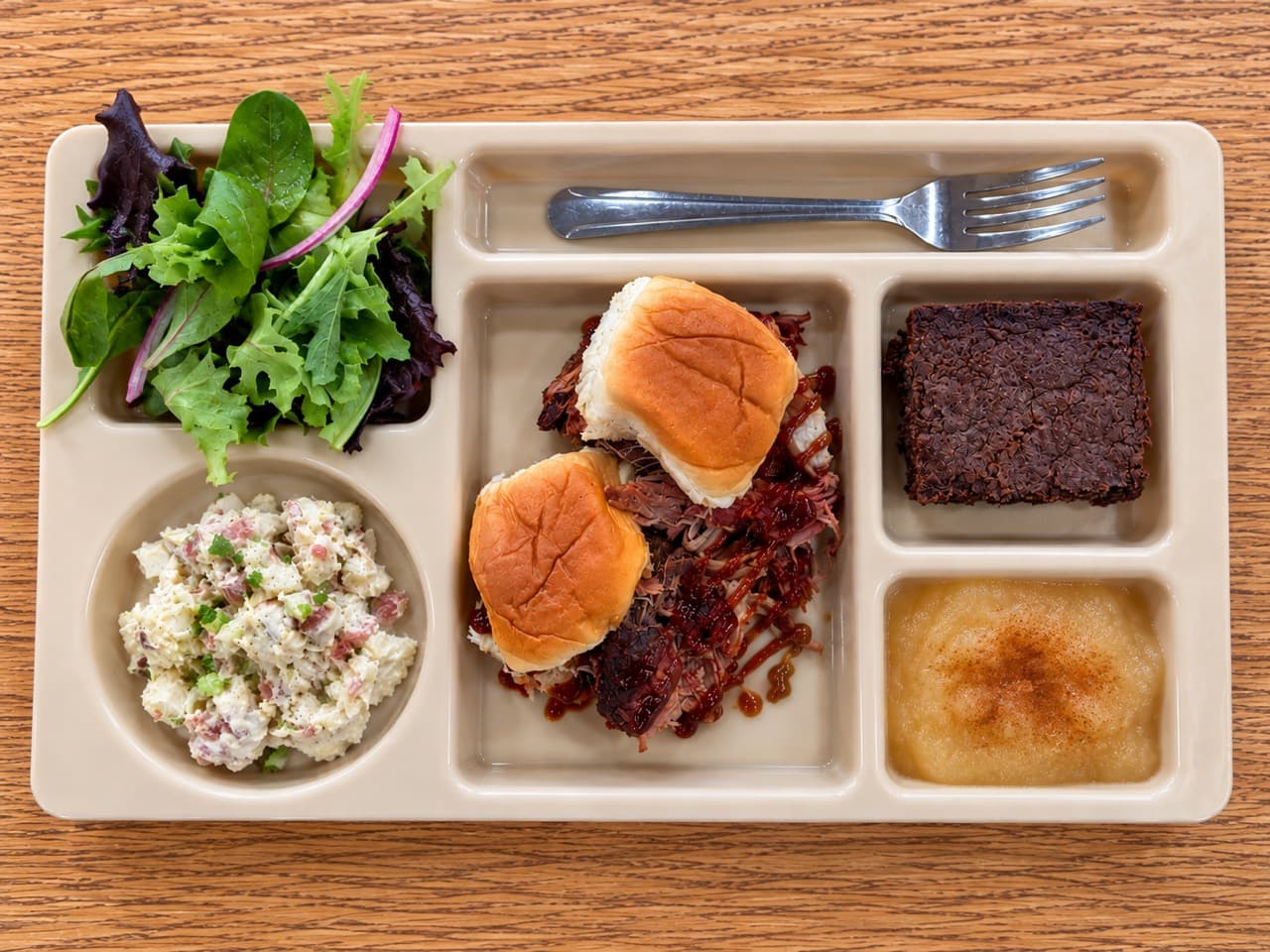
Smoked pulled pork sliders
Juicy pulled pork on Hawaiian rolls, with three ways to cook it: all smoker, smoker to oven, or all oven. Keep the drippings for sandwiches, nachos and another easy meal.
Published
- Servings
- About 12 (24 sliders, plus potato salad; yield varies with shoulder size)
- Total time
- Season at least 24 hours ahead, then allow the cooking time for your chosen method and about 20 minutes to rest and shred
A big batch is a good thing
Pulled pork on a King's Hawaiian roll is hard to beat. Pork shoulder is an economical cut that feeds a big family, and I like having extra. Sandwiches today, pulled pork nachos tomorrow. It's a Swiss Army knife in the kitchen.
Season it at least 24 hours before cooking and let it sit in the fridge. I recommend using a smoker if you have one. I run mine at 225°F and use a temperature probe. I use a MEATER at home. It's been a big help.
Once the pork gets to about 165°F, you have a choice. Wrap it in butcher paper and keep smoking, or cut it into chunks and finish it covered in the oven. You can also do the whole thing in a Dutch oven. Give those pieces a good sear first. That browning brings a lot of flavor. For the oven-only version, a little liquid smoke in the braising liquid adds smoky flavor. Start small. The smoker is still my first choice.
Keep those juices
When the pork falls apart, shred it right into the drippings. A ground-meat chopper, also called a meat masher, works well. Two forks do the job too. Those juices belong with the meat.
Pile it onto Hawaiian rolls, tuck it into tacos or scatter it over nachos. Freeze what you won't use in the next few days, with some of the juices in the bag. Reheat it gently with those juices and it stays nice and moist.
Home recipe
Smoked pulled pork sliders
The Lunch Lady · Jared Veldheer
- Servings
- About 12 (24 sliders, plus potato salad; yield varies with shoulder size)
- Prep time
- About 45 minutes
- Cook time
- Oven: at least 4 hours, usually 4 to 6 hours; smoker: 12 to 16 hours or longer; smoker to oven: 8 to 12 hours
- Total time
- Season at least 24 hours ahead, then allow the cooking time for your chosen method and about 20 minutes to rest and shred
Equipment: Probe thermometer, meat masher or two forks, mixing bowl; smoker and unwaxed food-grade butcher paper for the smoker method; Dutch oven for either oven method
Ingredients
Check off ingredients as you go.
Pork and scaled rub
For the method you choose
The all-smoker method does not need added liquid or oil. Use the liquid amount for your chosen oven method, not both amounts.
To serve
Bacon potato salad
Instructions
Season at least 24 hours ahead
- Check the shoulder's weight. The rub quantities suit a 7-pound shoulder; for a different weight, multiply each rub amount by the weight in pounds divided by 7. Mix the salt and rub ingredients. For either smoker method, season the whole shoulder on every side. For oven-only, cut into roughly 3-inch chunks first, then season all over. Cover and refrigerate for at least 24 hours before cooking.
- Choose just one of the three cooking methods below. I recommend a smoker if you have one. All three end with the same resting, shredding and finishing steps.
Choose your cooking method
Same seasoned pork. Pick the method that fits your kitchen. All three options print with the recipe.
Option 1: All smoker
- Heat the smoker to 225°F. Insert a probe into the thickest part of the whole seasoned shoulder and place the pork on the smoker. Arrange a drip pan underneath if your smoker allows, without blocking airflow.
- Smoke until the center reaches about 165°F and the outside has a dark, well-set crust, roughly 5 to 8 hours, sometimes longer. Check by 7 hours even if it has not reached 165°F. This is the wrapping stage, not the finished temperature.
- Wrap tightly in unwaxed food-grade butcher paper, return to the smoker at 225°F and continue until a probe slides in with almost no resistance and the meat pulls apart with a fork. Expect roughly 12 to 16 hours total, sometimes longer. The center is often around 200 to 205°F when tender, but tenderness decides.
- Move to the shared rest-and-shred step below. Save the juices caught in the paper and any usable pan drippings.
Option 2: Smoker to oven
- Heat the smoker to 225°F. Smoke the whole seasoned shoulder with a probe in the thickest part until it reaches about 165°F and develops a dark crust, roughly 5 to 8 hours, sometimes longer. Check by 7 hours. Meanwhile, heat the oven to 300°F.
- Carefully transfer the hot pork to a cutting board and cut into roughly 3-inch chunks. Place in a large Dutch oven with 1 cup bone broth, broth or regular cola. If the chunks fill the pot too tightly to close the lid comfortably, divide them between two covered oven-safe pots, splitting the liquid between them. Cover tightly and transfer straight to the oven to continue cooking.
- Braise at 300°F for approximately 3 to 4 more hours, checking from 2 hours because the pork is already hot. Add a splash of liquid if the pot is drying out. It is done when a fork pulls the meat apart easily and a probe slides in with almost no resistance.
- Move to the shared rest-and-shred step below, keeping the braising juices.
Option 3: Oven only
- Heat the oven to 300°F. Warm a Dutch oven on the stovetop over medium-high heat according to the pan manufacturer's guidance. Add the avocado oil. When it shimmers, brown the seasoned pork chunks in batches, about 2 to 3 minutes on each broad side. Leave room between pieces and lower the heat if the rub starts to scorch. Add a little more oil only if needed.
- Transfer browned pieces to a plate as you work. Pour 1 cup bone broth, broth or regular cola into the pot and scrape up the browned bits. For a smoky flavor, stir in the optional 1/2 teaspoon liquid smoke, or less if the bottle recommends it. Return all the pork and any plate juices, then cover tightly. Use two covered oven-safe pots if needed to fit the meat comfortably, splitting the liquid between them.
- Braise at 300°F for at least 4 hours, usually 4 to 6 hours and sometimes longer. Start checking for tenderness at 4 hours, adding a splash of liquid if needed. The pork should fall apart with a fork and offer almost no resistance to a probe. If it fights the fork, cover and keep cooking.
- Move to the shared rest-and-shred step below, keeping the braising juices.
Rest, shred and serve
- Let the pork rest for about 15 to 20 minutes, until manageable. Open smoker paper over a pan to catch its juices. Remove any large pieces of unrendered fat.
- Shred with a ground-meat chopper or meat masher, or pull apart with two forks. Fold the meat back into its drippings. If there is an excessive layer of fat, spoon off some fat while keeping the flavorful juices.
- Taste before adding sauce. Season with salt if it tastes flat, or a small splash of apple cider vinegar if it needs brightness. Add barbecue sauce to taste, starting with a light coating, or serve it at the table.
- Split the Hawaiian rolls, pile in the pork and serve. Save extra pork with some of its juices for nachos, tacos or another round of sandwiches.
Make the potato salad
- Cook the bacon in a skillet until browned. Reserve 2 tablespoons of fat, drain the bacon and chop it.
- Divide the diced potatoes between two large baking dishes, each with 1/3 cup water and a light sprinkle of salt. Cover tightly with foil and bake at 375°F until the cubes are tender but hold their shape, about 20 to 30 minutes. Check early. If the pork is using the oven, cook the potatoes at 300°F alongside it and allow more time, checking with a fork.
- Drain any excess water. While the potatoes are warm, gently fold in the reserved bacon fat and vinegar or pickle brine. Set aside 1 cup of the cooked potatoes for the dressing. Refrigerate the remaining potatoes until cool before adding the mayo dressing.
- Whisk the mayonnaise, mustard, sugar, onion powder, garlic powder, white pepper and celery salt together. Mash the reserved potatoes into the dressing. Taste before adding extra salt.
- Fold most of the dressing into the cooled potatoes with the celery and bacon. Add the remaining dressing as needed to coat the potatoes. Taste the finished salad and adjust the salt or vinegar a little at a time.
Recipe notes
- The recipe starts with one boneless pork shoulder, approximately 6 to 8 pounds. Rub quantities are based on 7 pounds. Weigh your shoulder and scale the rub as directed; servings are approximate. Times are estimates for this size. Shape, smoker temperature and the stall can change the schedule. A larger shoulder takes longer; use tenderness rather than a fixed deadline.
- Liquid smoke is optional and only for the oven-only version. Strength varies by brand. Start with 1/2 teaspoon for the whole batch, or less according to the label; after shredding, taste before adding a few more drops. Skip it when using a smoker.
- Choose one liquid: bone broth, broth or regular cola. You do not need all three. Cola gives a sweeter finish, so taste before adding barbecue sauce.
- Preheat your Dutch oven according to the manufacturer's instructions, especially for enameled cookware.
- Refrigerate leftover pork with its juices in shallow containers within 2 hours and use within 3 to 4 days. Freeze extra portions promptly in freezer bags with some juices, press out the air and lay flat. Use within about 3 months for best quality.
- Thaw overnight in the refrigerator. Reheat covered with the saved juices and a splash of broth if needed, until the pork reaches 165°F. Keeping it covered helps prevent drying.
- Keep a little potato salad dressing back and fold it in before serving if the potatoes have absorbed the first addition.